


Today, we're joined by Hasan Geren, who started out in industrial engineering and data science before moving into data engineering. For the past three years, he's been working across both academia through PhD research and industry, and he's now a data engineer at a high-growth startup.
To recap: the series follows a Q&A format, featuring professionals who share their journeys, insights, and challenges.
What to Expect:
Practical insights – Get a clear view of what data engineers do in their day-to-day work.
Emerging trends – Stay informed about new technologies and evolving best practices.
Real-world challenges – Understand the obstacles data engineers face and how they overcome them.
Myth-busting – Uncover common misconceptions about data engineering and its true impact.
⭐ If you're curious about data engineering or considering it as a career, this series is for you!
Let’s dive into Inside Data Engineering:
How would you describe Data Engineering?
Data engineering is about understanding what different teams need from data, aligning on definitions, and providing the systems and infrastructure that address those needs. It’s a mix of technical and social skills, because good data engineering often comes down to;
Clear communication
Effective collaboration between teams
Near-optimal architectural choices
Systems people can trust
How did you end up being a Data Engineer?
I started out in Industrial Engineering, exploring different paths through internships. While Industrial Engineering didn’t excite me much, I got into data mining and machine learning during grad school, which led to my first role as a Data Scientist. I was the third person to join an AI startup, and without a dedicated Data Engineer, Architect, or Cloud Engineer, I had to build the entire data foundation myself. That experience made me realise I enjoyed the Data Engineering parts the most. Therefore, I began a PhD on distributed stream processing, and that marked my full transition into Data Engineering almost 3 years ago.
What's your day-to-day look like?
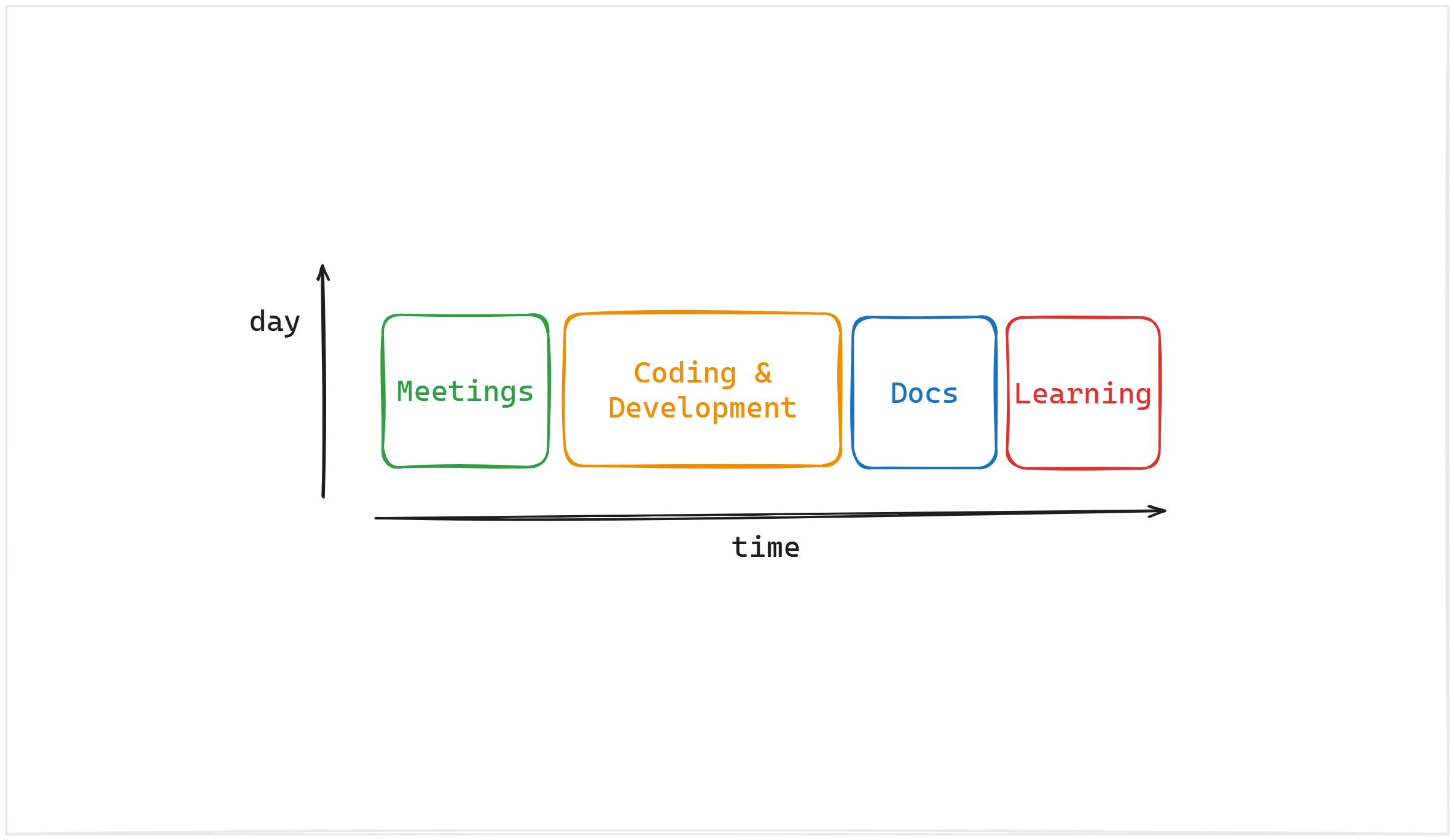
My average day-to-day probably looks like this:
20% Meetings
60% Development/Coding
10% Documentation (Aiming to make this 20% and Coding 50%)
10% Learning/Reading
It’s hard to put it into a fixed structure, since something unexpected almost always pops up, but I think these percentages reflect the general distribution quite accurately.
What are some stakeholders that you work with?
I work with a full range of stakeholders, it’s really the full package. I work with:
Analytics
Product teams
AI/ML teams
HR
C-suite.
What kind of projects do you work on?
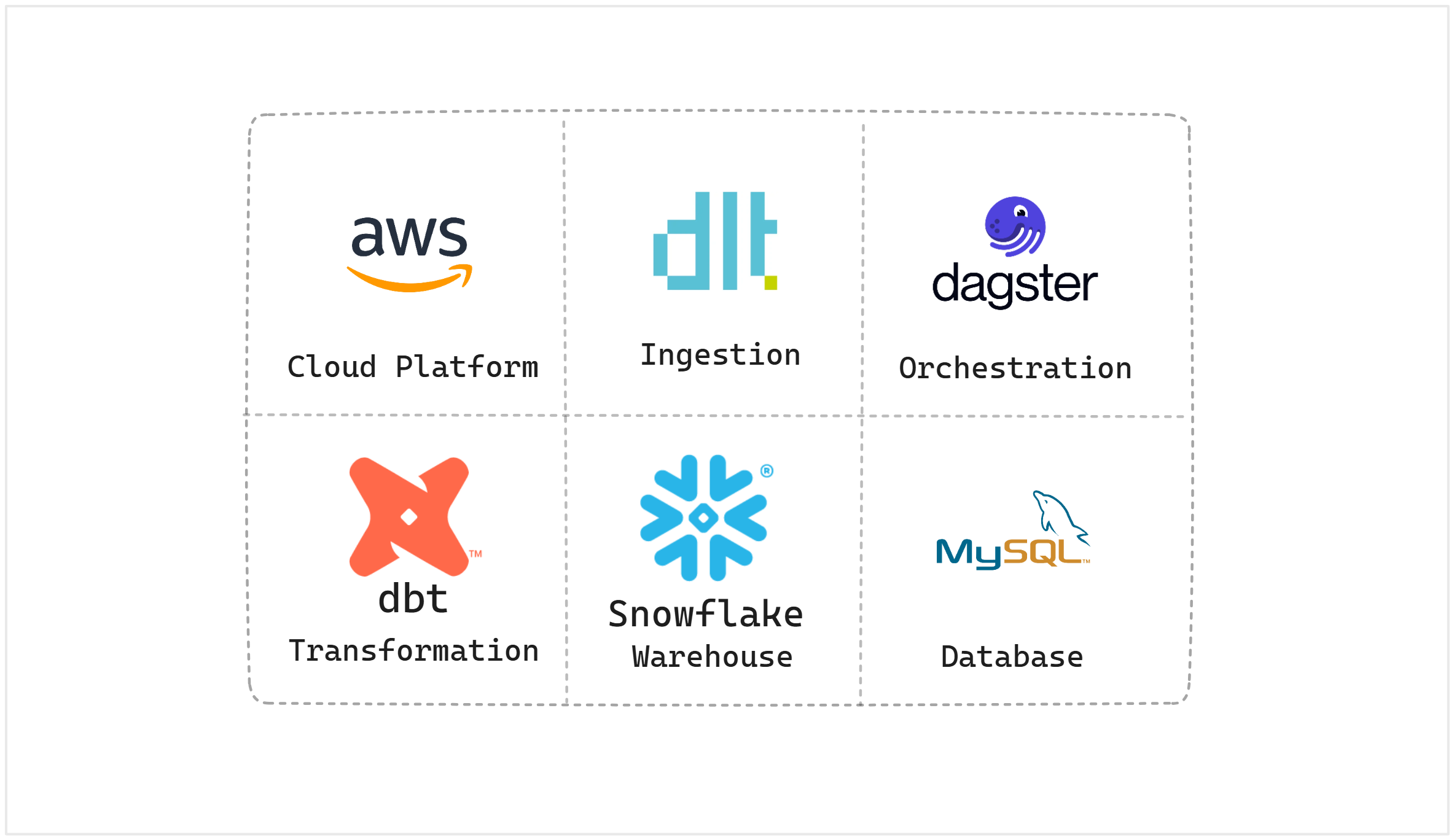
The projects I work on vary quite a bit. Most frequently I build data pipelines that ingest data from APIs or databases, transforming and modelling it in the semantic layer, and orchestrating the entire process with workflow tools.
I often dive deep into semantic modelling to create metrics that meet criteria of different domains. From time to time, I also build dashboards on top of the pipelines I’ve created to support stakeholders directly.
On top of that, I handle DevOps-related tasks like implementing CI checks to maintain standards and manage our cloud infrastructure using Infrastructure as Code.
What kind of data do you work with?
I mostly work with tabular data and event data. Tabular data typically comes from APIs or transactional databases and event data from streaming tools which captures frontend or backend events.
What data size do you work with?
It is relatively small. I’d say a couple TBs the most.
What tech stack do you use?
What tools do you leverage for GenAI?
I mostly use ChatGPT and Claude for brainstorming and sometimes quick prototyping. I also use Warp, an AI-powered terminal, which I think is a great productivity boost for data engineers who spend a lot of time in the shell.
What is your favorite area of Data Engineering?
I’m not sure I have a single favourite area, but what I really enjoy about Data Engineering is the mixture it offers of learning, research, and engineering. For someone like me who loves deep reading and also building real systems to test and implement new ideas, it’s the perfect mix.
What is the next big thing according to you in Data Engineering?
I’d say a “real” self-serve analytics layer. Most tools today that claim to offer self-serve analytics still require a lot of dependency on data teams. But with the emergence of semantic models and the integration of GenAI, I believe we’re getting closer.
What advice would you give your past self as a beginner Data Engineer?
Don’t hesitate to ask more questions!
Listen to advice, but always think critically and filter what aligns with your goals and understanding.
No one knows everything.
Optimal is the enemy of good.
What are some challenging aspects of Data Engineering?
The first challenge I’d point out is how overwhelming the field can be for beginners. There are so many concepts, tools, and stakeholder dynamics involved that people can get stuck just trying to figure out where to start.
The second one is that many companies still lack data-literate managers or executives. This can lead to unrealistic expectations, poor prioritisation, and unnecessary pressure on data engineers.
I hope this article was helpful for the readers. Thanks to Hasan for sharing his experience with my audience. Stay tuned for more!
Please reach out if you like:
To be the guest and share your experiences & journey.
To provide feedback and suggestions on how we can improve the quality of questions.
To suggest guests for the future articles.
Thanks for the interview. I hope it will help people who are thinking about transitioning into data engineering. 🙏🏻